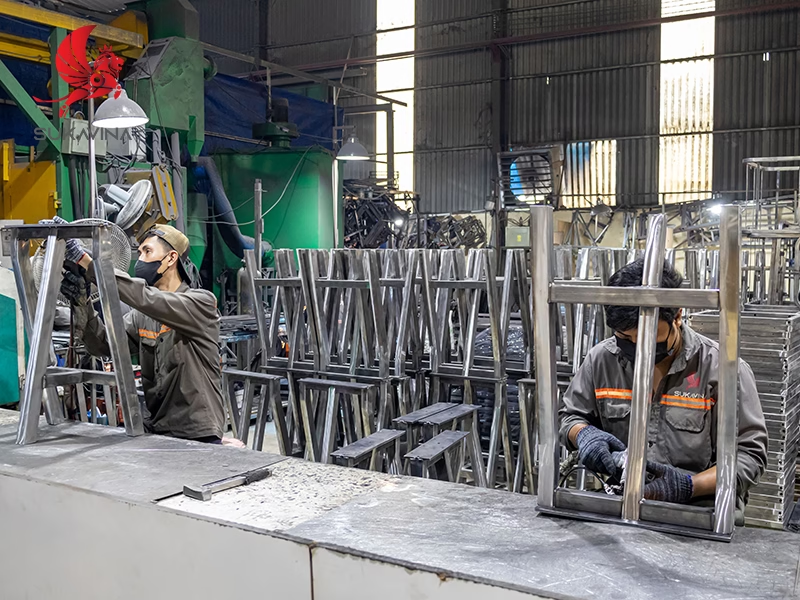
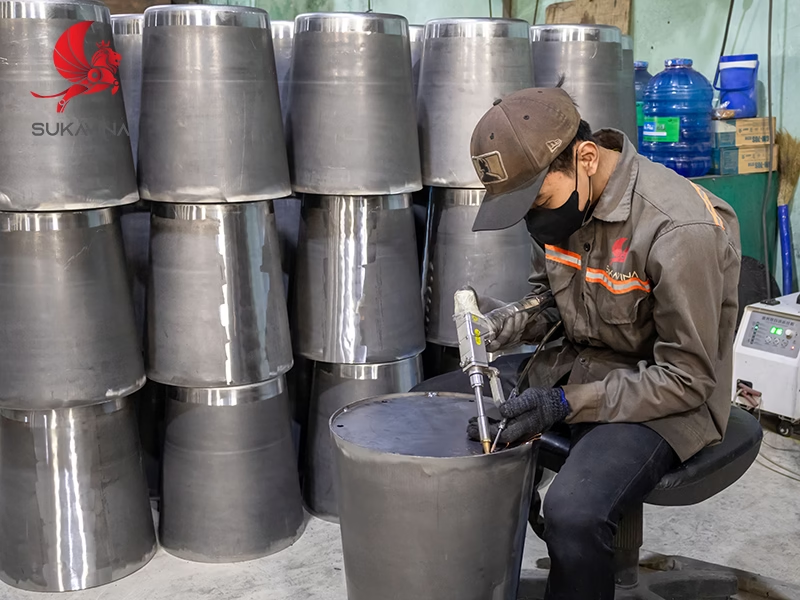
The stability of artistic metal box frame furniture does not lie in the thickness of the steel or the external design, but in how the metal components are connected. In real manufacturing conditions, a furniture set may appear well-finished but start to develop slight wobbling or imbalance after only a few months of use. The cause is often not the design itself, but the welding technique used in the frame structure.
Weld Joints Determine Load Distribution in the Structure
From a technical perspective, each weld joint in a steel box frame is not merely a connection point, but a critical location where forces are transferred and distributed.
When force is applied to a table or chair, it travels through intersections such as legs, support bars, and connection points. If the welds at these positions lack proper penetration or are only superficially applied, the force will not be evenly distributed, leading to localized stress.
The result may not appear immediately, but over time, the frame begins to develop micro-vibrations—subtle movements that users can feel when placing their hands or sitting for extended periods. This is a common issue in fast-production metal frame furniture where welding quality is not properly controlled.
Weld Joints Determine Load Distribution in the Structure
Heat Distortion During Welding Affects Frame Accuracy
One technical factor that is often overlooked is heat distortion during the welding process. When steel is heated at the weld point, it expands locally and then contracts as it cools. Without proper heat control or the use of fixing jigs, this shrinkage can slightly alter the alignment of the frame.
In artistic metal box frame table designs, even a deviation of a few millimeters is enough to create imbalance on a flat surface. This explains why some tables may appear visually straight but still wobble during use.
Experienced manufacturers typically control this issue by using jigs and a calculated welding sequence to minimize thermal distortion.Heat Distortion During Welding Affects Frame Accuracy
Poor Welding Leads to Gradual Structural Degradation
A key characteristic of welding defects is that they are not immediately visible after production. Issues such as internal porosity, micro-cracks, or insufficient weld penetration are often hidden beneath the surface, especially after grinding and powder coating. However, under repeated load over time, these weak points begin to open up, weakening the structural connection between components.
At this stage, the furniture does not break, but it starts to show signs of structural looseness, including slight noise, instability, or reduced rigidity. This type of gradual degradation directly affects user experience, especially in high-usage environments such as cafés, restaurants, and commercial spaces.
Users may not see the welds, but they can immediately feel their quality during use. A product with well-executed welding provides a solid, grounded feeling: no vibration when pressure is applied, no shifting while sitting, and no unwanted noise during slight movement.
On the other hand, even a minor welding flaw at a load-bearing point can compromise the entire experience. In high-end environments such as showrooms, hotels, or premium cafés, these subtle details often define the perceived quality of the furniture.
Stability Is Immediately Noticeable to Users
Welding Is Only Half – Post-Weld Processing Completes the Quality
A strong weld alone is not sufficient without proper post-weld treatment. After welding, joints must be carefully ground to remove burrs and smooth the surface. However, excessive or uncontrolled grinding can weaken the weld itself.
The next step involves surface preparation before coating, including cleaning oil residues, removing oxidation, and creating surface roughness. This process directly affects the adhesion of the powder coating If done improperly, the coating may peel at weld نقاط—areas that experience the highest stress.
Welding technique in metal furniture frames is not a visible detail, but it is the defining factor behind the true stability of artistic metal box frame furniture. From load distribution and structural accuracy to long-term durability, everything depends on the quality of the welded joints. In modern furniture manufacturing, especially for products that demand both aesthetics and engineering precision, controlling the welding process is no longer optional—it is a fundamental requirement.
At Sukavina, metal box frame furniture is developed on a foundation of precision mechanical fabrication, with standardized welding processes tailored to each product line, ensuring real stability in use—not only at the finishing stage, but throughout the entire product lifecycle.


 Tiếng Việt